Cash Flow Sensors Guiding Flexible Loan Terms Amidst Instant Approvals Lacking Credit Histories
Quinn Coleman · Jul 23, 2026

Cash Flow Sensors Guiding Flexible Loan Terms Amidst Instant Approvals Lacking Credit Histories
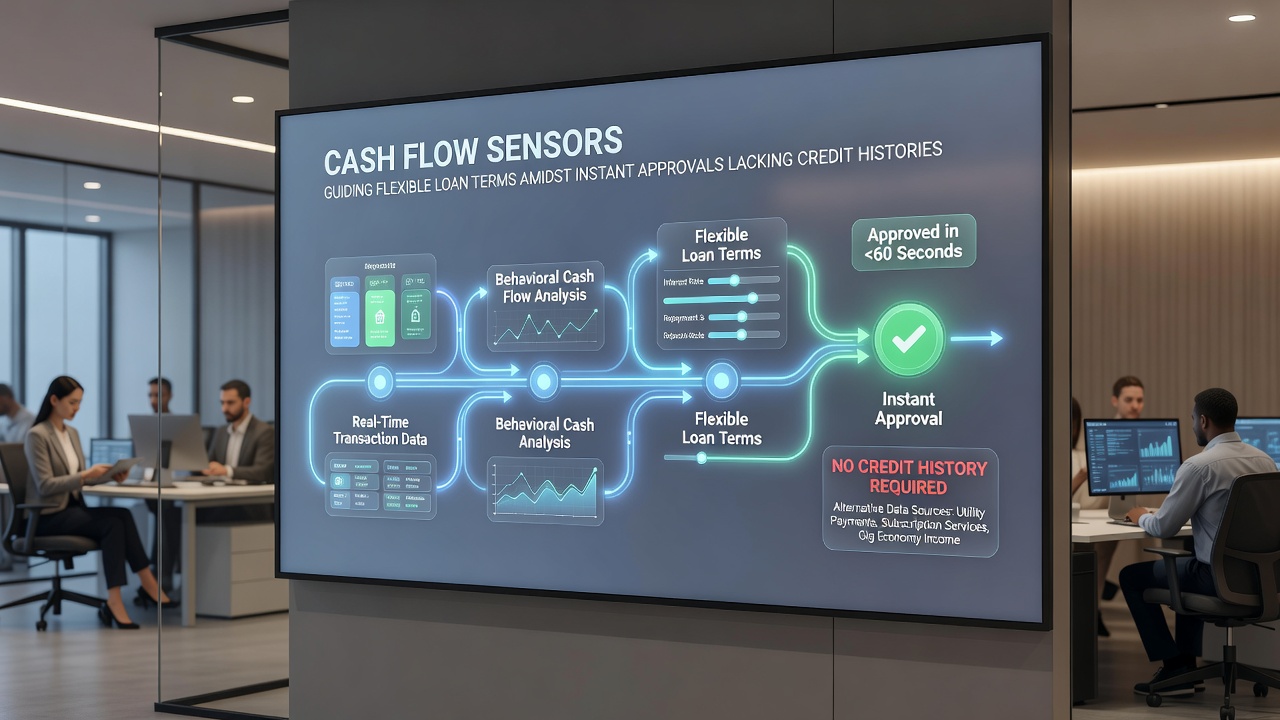
Financial technology platforms now deploy cash flow sensors that track incoming and outgoing transactions in real time, and these tools shape loan terms during approvals that skip traditional credit checks entirely. Borrowers without established credit histories gain access through systems that pull bank account data directly, assess patterns over recent weeks or months, and generate customized repayment schedules based on actual inflows rather than score-based predictions. Data from multiple platforms indicates that approval times often drop below five minutes when algorithms focus on verified cash movement instead of historical credit files.
Real-Time Data Capture in Lending Systems
Sensors connect to borrower accounts via secure APIs, monitor deposits and withdrawals continuously, and flag variability that influences payment amounts. Researchers at several fintech firms note that these systems adjust interest rates or installment sizes automatically when revenue spikes or dips occur, which helps maintain repayment feasibility without fixed monthly demands. In July 2026, updates from regulatory bodies in Australia and Canada showed increased adoption rates for such monitoring among lenders serving gig economy workers who lack steady pay stubs.
Platforms integrate these sensors with automated underwriting that evaluates average daily balances, frequency of large deposits, and seasonal fluctuations, and the process bypasses credit bureaus altogether. Observers point out that this approach relies on open banking frameworks established in the European Union and similar initiatives in the United States, where data sharing permissions allow instant verification.
Flexible Terms Driven by Cash Flow Patterns
Loan agreements built around sensor data often include variable amortization schedules that shift with documented income changes, and lenders report lower default incidents when payments align with actual cash availability. One documented case involved a platform that reduced installments by 15 percent during months with lower deposits, then restored original amounts once inflows stabilized, all without new applications. Figures from industry reports reveal that these adjustments occur through pre-set rules rather than manual review, which keeps processing swift.
Support teams monitor sensor outputs around the clock in many operations, intervene when anomalies appear, and guide borrowers toward revised terms that match current financial conditions. According to a study released by a Canadian research institute, borrowers using these systems completed repayments on schedule at rates comparable to traditional credit-checked loans, provided the sensors captured at least three months of transaction history.
Instant Approvals Without Credit Histories
Approval engines combine sensor readings with identity verification steps, and decisions finalize once cash flow thresholds are met. Lenders in the United Kingdom and parts of Asia have expanded this model to reach populations previously excluded from formal credit, since transaction records substitute for score data. The process typically requires explicit consent for data access, and algorithms weigh consistency of inflows more heavily than total volume in some implementations.
Evidence from multiple deployments shows that instant approvals become feasible because sensor technology eliminates delays associated with credit pulls, yet risk assessment remains tied to observable patterns. Those who've examined the systems note that fallback options exist when cash flow appears insufficient, including smaller initial disbursements that scale upward after demonstrated repayment behavior.
Regulatory and Technical Developments
By July 2026, several jurisdictions updated guidelines on real-time data usage in consumer lending, which encouraged further refinement of sensor accuracy and privacy controls. Academic papers from European universities have analyzed how these tools correlate repayment success with specific cash flow metrics, such as minimum balance maintenance and deposit regularity. Industry organizations continue to publish benchmarks that compare performance across regions with differing open banking rules.
Technical standards now require encryption during data transmission and regular audits of sensor algorithms to prevent bias in term adjustments. Platforms that adopt these standards often share aggregated statistics showing how flexible structures accommodate irregular earnings without increasing overall portfolio risk.
Conclusion
Cash flow sensors continue to expand access to lending products by replacing credit history requirements with transaction-based evaluations, and the resulting flexible terms adjust dynamically to documented financial activity. Data from ongoing implementations across multiple countries demonstrates that instant approvals paired with real-time monitoring create pathways for borrowers who previously faced barriers, while maintaining measurable repayment outcomes through automated adjustments.