Gig Economy Earnings and Tech-Enabled Tweaks to Amortization in Review-Free Lending Systems
Sam Krause · Aug 13, 2026

Gig Economy Earnings and Tech-Enabled Tweaks to Amortization in Review-Free Lending Systems
Platform-based employment continues to expand across multiple sectors and data from the Bureau of Labor Statistics shows that millions of individuals now derive primary or supplemental income through app-mediated tasks such as rideshare driving and delivery services. Earnings in these arrangements fluctuate daily or weekly because demand patterns shift with weather, events, and consumer behavior, which creates distinct challenges when borrowers enter lending arrangements that skip traditional credit evaluations.
Variable Income Patterns in Platform Work
Researchers at academic institutions have documented that gig workers often experience income swings of 30 percent or more from one month to the next, and these patterns appear in both urban and suburban markets. Payment processors record deposits in real time, yet the amounts depend on hours logged, acceptance rates, and surge pricing windows rather than fixed salaries. Observers note that this cash-flow profile differs sharply from salaried employment where amortization tables assume steady monthly inflows.
Review-Free Lending Structures
Lending platforms that bypass conventional credit checks instead pull bank transaction histories, utility payment records, and sometimes platform earnings dashboards to assess repayment capacity. In these systems, initial approval hinges on demonstrated cash movement rather than credit scores, and contracts frequently include clauses that permit schedule adjustments when incoming funds vary. Figures released by regulatory bodies in Canada and Australia indicate rising adoption of such products among self-employed applicants during 2025 and into mid-2026.
Algorithmic Adjustments to Amortization
Software used by several fintech lenders now ingests live earnings feeds from gig platforms and recalculates expected monthly outflows accordingly. When a driver’s deposits drop below a threshold for two consecutive weeks, the system automatically lengthens the remaining term or reduces the next scheduled payment while preserving total interest obligations. Data analysts at European research centers report that these dynamic models reduce missed-payment events by aligning due dates with verified deposit cycles rather than calendar months.
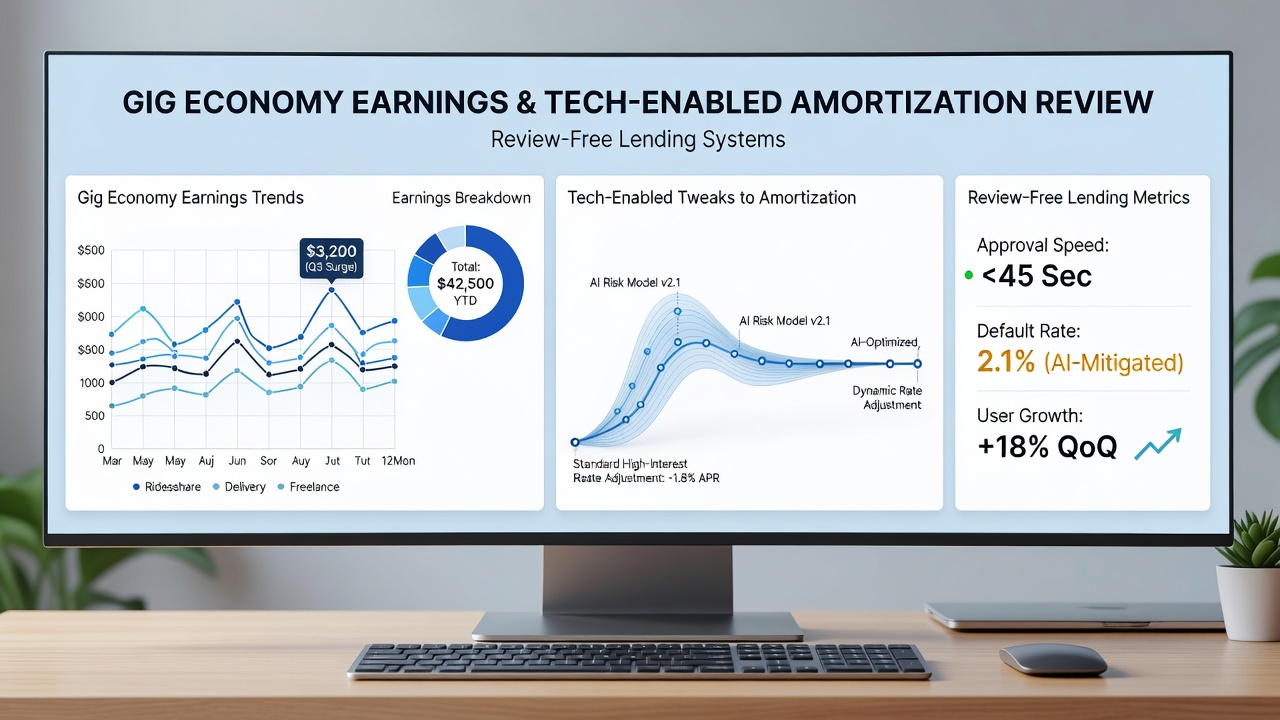
Integration occurs through secure APIs that transmit anonymized transaction summaries without exposing full account details, and borrowers receive notifications through the same mobile apps they use to accept gigs. In August 2026 several major platforms introduced optional toggles that let users pause or stretch payments for up to 14 days when earnings fall below historical averages, an option triggered automatically once the algorithm flags sustained shortfalls.
Implementation Across Regions
North American operators rely heavily on direct bank feeds while counterparts in the European Union incorporate open-banking mandates that standardize data sharing. Both approaches feed the same core engine that recalibrates amortization tables on a rolling basis. Studies from universities in Singapore and the United Kingdom have examined outcomes and found that borrowers using these adaptive schedules maintain higher completion rates than those on static plans, though aggregate default volumes still reflect broader economic conditions.
Operational Mechanics
Once a loan activates, daily earnings data streams into the lender’s risk model and triggers recalculation if cumulative inflows deviate more than a preset percentage from the baseline used at origination. The revised schedule then updates the remaining principal allocation across future periods without requiring new paperwork or manual review. Industry reports compiled by trade associations note that processing times for these adjustments average under four hours when all feeds remain connected.
Future Data Trends
Projections prepared by economic forecasting groups anticipate continued growth in gig participation through 2027, which will likely increase demand for lending products that accommodate irregular cash flows. As more jurisdictions adopt open-data standards, the precision of real-time amortization tweaks is expected to improve because models will draw from wider datasets. Current implementations already demonstrate that syncing repayment cadences to verified deposit patterns can stabilize cash management for both borrowers and lenders operating outside traditional credit frameworks.
Conclusion
Platform earnings volatility and review-free lending have converged around software that continuously refines amortization timelines according to live cash-flow signals. These systems operate through API connections and rule-based triggers rather than fixed schedules, and available statistics indicate measurable differences in repayment continuity compared with earlier static models. As participation in variable-income work expands, the technical infrastructure supporting these adjustments continues to evolve in multiple regulatory environments.